

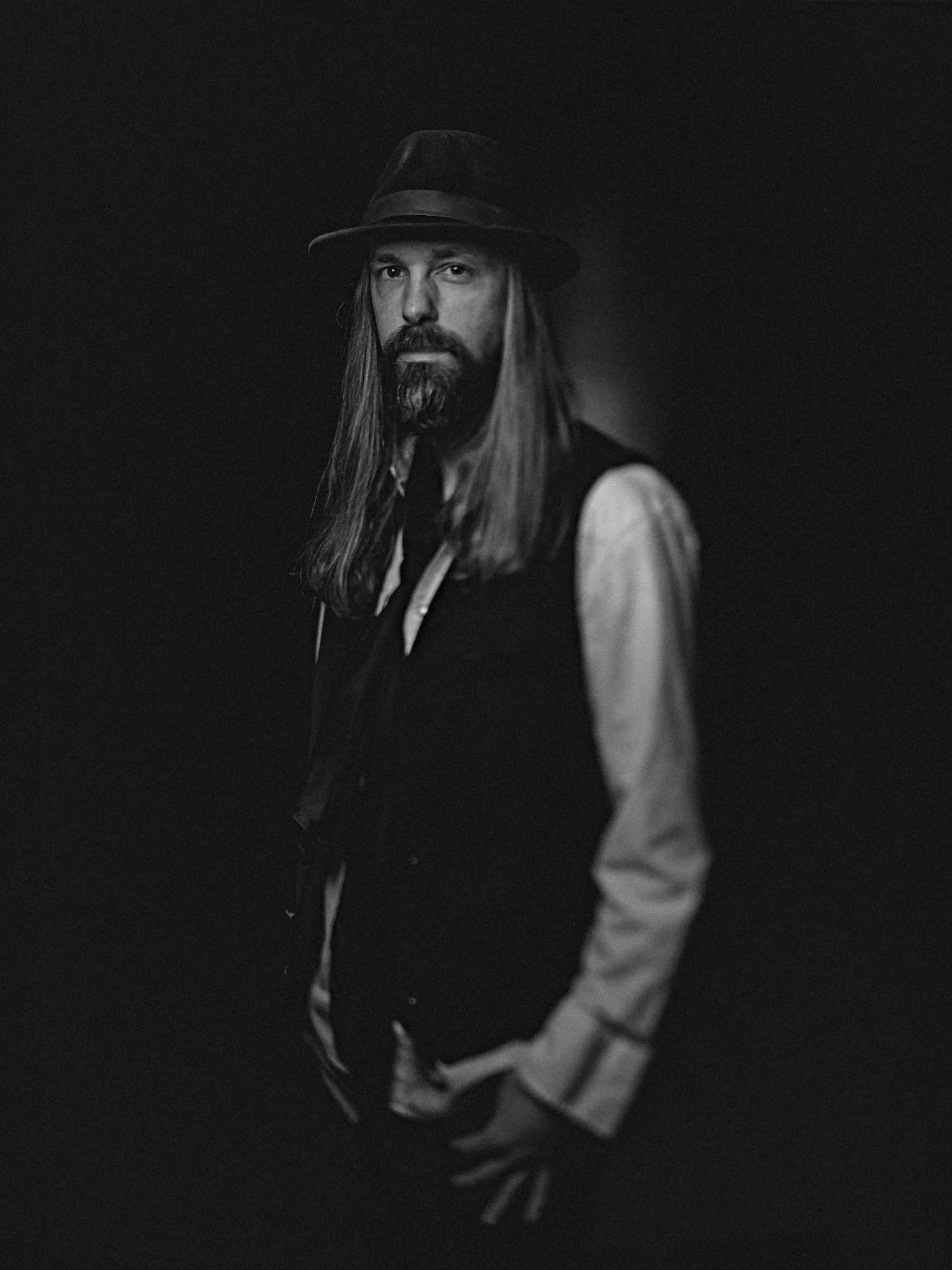
Private Portrait Commission Guide
A Portrait Begins Before the Camera Arrives.
Being photographed is an unusual experience.
Most of us spend our lives seeing other people far more often than we see ourselves. A commissioned portrait asks us, for a brief period of time, to reverse that relationship—to become the subject.
My job is to make that experience comfortable, collaborative, and ultimately enjoyable.
I don't expect you to know how to pose. You don't need to arrive with a creative concept or know what kind of lighting will flatter you. You don't even need to consider yourself particularly photogenic.
Those are my concerns.
What I want from you is much simpler: arrive as yourself and give us enough time to create something meaningful.
Our First Conversation
I'll want to understand a little about you, why you're considering a portrait, and what you hope the finished work might communicate.
Perhaps it's a portrait intended for your home. Perhaps it marks an important moment in your life or career. It may be for an office, publication, album, book jacket, or simply because you want an enduring portrait of yourself or someone important to you.
You don't need to know what the photograph should look like. Developing that visual direction is part of the commission.
Designing the Portrait
My portraiture is intentionally minimal.
Most often, I photograph against a black or white background, using carefully controlled studio lighting designed specifically for the subject. By removing the distractions of an environment, the portrait becomes about the individual—their expression, gesture, character, and presence.
The lighting, composition, and photographic environment are constructed rather than discovered. The intention is to create a portrait that feels distinctly different from the way you are ordinarily photographed: something considered, revealing, and difficult to reproduce outside the sitting itself.
On occasion, an environment or natural light may offer something worth exploring, but that is the exception rather than the foundation of my portrait practice.
The subject determines the portrait.
Finding a Place to Work
I don't need a traditional photography studio, but I do need enough space to create one.
A garage is often ideal. A large office, conference room, open living space, workshop, or another room where furniture can be moved and windows can be covered may work equally well.
What matters is a clear working area with sufficient room for a background, photographic equipment, lighting, and light stands.
Before the commission, I may ask you to send a few casual phone photographs or a short video of potential spaces. I'll use those to determine what will work best and what equipment I'll need to bring.
If your location doesn't provide an appropriate working space, we'll identify another solution together.
What to Wear
This is probably one of the first questions you'll ask.
My answer is usually: start with yourself.
Wear clothing that feels authentic to you and appropriate to the portrait we're creating. Simple, well-fitting pieces tend to photograph beautifully. Texture can be wonderful. Strong personal style can be wonderful. A favorite jacket you've owned for fifteen years may tell me considerably more about you than something purchased specifically for a photograph.
What I generally want to avoid are prominent logos, distracting patterns, or clothing that competes unnecessarily with your face.
Bring options.
We can make the final decisions together.
For an executive portrait, don't automatically assume that means a suit. For an artist, don't assume you need to look artistic. For a musician, don't dress like someone's idea of a musician.
The objective is not to create a character.
It's to photograph you.
Grooming, Hair & Makeup
Think of the commission as you would an important occasion.
Haircuts are generally best done far enough in advance that they have time to settle. The same principle applies to significant changes in hairstyle, facial hair, or appearance—portrait day is rarely the ideal moment to experiment.
Professional hair and makeup can be arranged when the portrait calls for it. This may be particularly appropriate for editorial work or more formal commissions, but it is by no means required.
The objective isn't transformation.
I want you to recognize yourself in the finished portrait.
“But I Hate Having My Picture Taken.”
You're in very good company.
Many of the people I photograph begin by telling me some version of exactly that.
Fortunately, being comfortable in front of a camera is not a prerequisite for having a compelling portrait made.
You don't need to know where to look.
You don't need to know what to do with your hands.
You don't need to manufacture an expression.
And you certainly don't need to smile on command.
I'll direct you when direction is useful. We'll talk. We'll experiment. We'll stop and adjust things. Sometimes we'll make photographs deliberately; sometimes the photograph appears somewhere between those moments.
You are not expected to perform for me.
The Session
I don't rush portrait sessions.
The beginning of a session is often simply about settling into the environment and becoming accustomed to being photographed.
As we work, I may change lighting, move the camera, alter the background, suggest another piece of clothing, or explore a completely different composition. Some ideas will work immediately. Others may lead us somewhere unexpected.
That's part of the process.
The Creative Fee covers a dedicated photography session for the commissioned subject. The session is designed around the person—or group—we've established together in advance, allowing me to prepare specifically for the portrait we're creating.
What If We Want Another Portrait While You're Here?
It happens.
A spouse may decide they'd like a portrait. You may realize you'd like one with your children. Someone may ask whether I can photograph a business partner, colleague, or beloved dog while everything is set up.
Whenever time and production requirements permit, I'm happy to consider it.
Additional subjects are treated as additional commissions rather than extensions of the original session. We'll discuss the scope and any additional Creative Fee before we begin, so there are never surprises afterward.
The original commission always comes first.
Couples, Families & Groups
When a couple, family, or group is the commissioned subject from the outset, I'll plan for them from the outset.
We'll consider how everyone relates within the frame, what they're wearing, where we'll photograph, and whether individual portraits should be part of the original creative plan.
For families, I generally prefer coordination rather than matching. People should look like they belong together without looking as though they've been issued uniforms.
We'll work through those details before I arrive.
A Small Production—or a Larger One
Every portrait is photographed and creatively directed by me.
Many commissions require nothing more than my standard photographic equipment and enough room to work. Others may benefit from an assistant, lighting technician, hair and makeup artist, stylist, or another specialist.
If I believe additional production support will materially improve the work, I'll recommend it during planning.
Nothing is added without discussing it with you first.
After the Camera Is Put Away
The commission isn't finished when the photography ends.
I personally review the work and make a careful edit of the strongest photographs. I'm not interested in presenting hundreds of variations or every frame that happened to be captured.
Curation is part of the creative process.
Once the photographs have been prepared, we'll meet for a private artwork presentation and review the collection together.
This is when we begin thinking about the photographs not simply as images on a screen, but as objects: which portrait speaks most strongly, what scale it deserves, where it might live, and how it should ultimately be presented.
The Finished Portrait
I believe photographs intended to endure should exist physically.
Finished artwork is produced using museum-quality archival materials selected for image quality, longevity, and presentation. Prints are available in a range of sizes and can be professionally framed to complement both the photograph and the environment in which it will live.
Every finished print is individually signed in verso and accompanied by a Certificate of Authenticity documenting the work and its provenance.
Finished artwork, framing, shipping, and installation when required are quoted separately from the Creative Fee.
The Investment
Private Portrait Commissions begin with a $4,500 Creative Fee.
The Creative Fee includes our initial consultation, creative planning and pre-production, a dedicated photography session for the commissioned subject, professional image editing and preparation, private artwork presentation, and artwork consultation and ordering assistance.
Travel and lodging, when required, are quoted separately.
Should the commission require specialized crew, equipment, location arrangements, or other production expenses, we'll discuss and approve those costs before the commission.
There are no unexpected production charges.
Before I Arrive
A simple checklist:
You
Wardrobe options selected, prepared, and ready
Hair and grooming completed before our scheduled photography time
Eyeglasses, jewelry, watches, and other accessories considered in advance
Any personal objects we’ve discussed incorporating into the portrait available
Your location
Agreed photography area accessible and reasonably clear
Sufficient floor space available for backgrounds, lighting equipment, and light stands
Furniture and temporary clutter removed from areas we may use
Window shades or coverings available where appropriate
Any parking, loading, security, building access, or other restrictions communicated in advance
Other participants
Everyone included in the commissioned portrait aware of the schedule
Wardrobe coordinated when appropriate
Hair and grooming completed before our scheduled photography time
Everyone ready at the agreed time
And most importantly:
This isn’t about perfection. My job is to find something real and unmistakably you within the photograph.
Have Questions?
No two portraits are quite the same.
If you have questions about wardrobe, location, scheduling, travel, the creative process, or anything else related to your commission, please don't hesitate to get in touch.